
THE INVISIBLE CHILD / RELIEF GIVER
“If I don't need much, I can't be disappointed.”
You learned how to handle things yourself.
You may not ask for much. You don't want to burden people. When relationships become painful, something inside you may simply pull back.
Needing less can feel safer than needing something you aren't sure someone will give.
And much of it comes from a genuine strength:
You are incredibly self-sufficient.
But somewhere along the way, independence may have become disconnection.
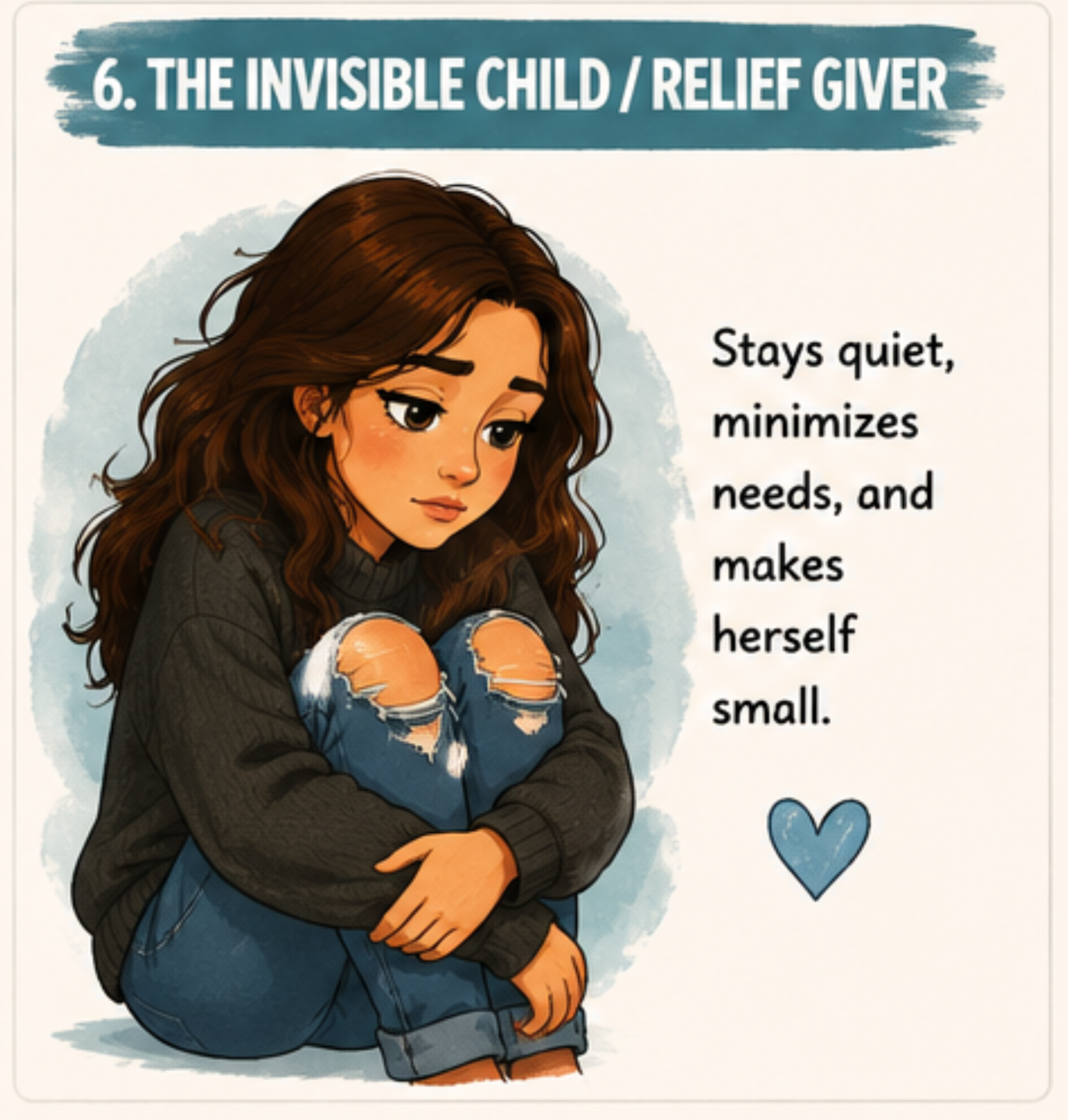

Core Need: Safety through self-sufficiency and minimizing dependence

Core Fear: If I depend deeply on people, I may eventually be hurt, disappointed, rejected, or let down.

Core Belief: “It's safer to stay out of the way, need very little, and handle things myself.”

Protective Strategy: Withdraw. Minimize needs. Self-soothe. Detach. Stay quiet. Expect little. Handle it alone.

What Love Can Become: Staying connected while carefully limiting how much you actually need from another person.
HOW DID I BECOME THE INVISIBLE CHILD?
You didn't wake up one day and decide you didn't need anyone.
The Invisible Child often develops in a family system where there wasn't much room for her needs.
Maybe the family was overwhelmed.
Maybe another sibling required enormous attention.
Maybe adults were unavailable, inconsistent, stressed, or emotionally preoccupied.
Maybe asking didn't reliably result in receiving.
So you adapted.
You stayed out of the way.
Handled things yourself.
Needed less.
Made life easier for everyone else.
And somewhere along the way:
“It's safer not to need what someone may not be able to give me.”
The strategy made sense then.
But needing very little can eventually protect you from disappointment by also protecting you from deep connection.
WHEN INDEPENDENCE BECOMES AN IDENTITY
They exchanged the truth about God for a lie, and worshiped and served created things rather than the Creator—who is forever praised. Amen. Romans 1:25
God created you with the capacity for strength, resilience, independence, reflection, and personal responsibility.
But strength can become distorted.
- “I can handle this.” becomes...
- “I should handle this.” which becomes...
- “I don't need anyone.” and eventually...
“Depending on people isn't safe.”
What began as resilience becomes withdrawal.
What began as independence becomes isolation.
What began as self-sufficiency becomes protection from vulnerability.
And eventually, needing nothing can begin feeling safer than risking disappointment.

HOW THE INVISIBLE CHILD MAY SHOW UP IN YOUR MARRIAGE
You might:
- Stop asking after repeated disappointment.
- Say “I'm fine” when you aren't.
- Withdraw when conflict becomes emotionally intense.
- Process difficult emotions privately rather than letting your husband see them.
- Expect him to recognize needs you struggle to express.
- Convince yourself something doesn't matter because wanting it feels too vulnerable.
- Become increasingly independent when the marriage feels unsafe or disappointing.
- Find it difficult to receive help even when it's offered.
- Feel exposed when someone gets emotionally close.
- Quietly detach long before anyone realizes how disconnected you've become.
And slowly:
You can protect yourself from disappointment by no longer expecting connection at all.
WHAT IS THE INVISIBLE CHILD REALLY AFRAID OF?
Underneath the independence is often:
Dependence without safety.
What if you need someone and they don't show up?
What if you reveal yourself and they don't care?
What if you reach and no one reaches back?
So you stop reaching.
Expect less.
Handle it yourself.
Because sometimes loneliness feels safer than disappointment.
WHAT THIS BORROWED IDENTITY CAN COST YOU
The Invisible Child can look incredibly independent while the woman underneath feels deeply alone.
You may experience:
Isolation. Emotional distance. Difficulty asking for help. Difficulty identifying needs. Quiet resentment. Detachment. Loneliness. Feeling unseen while simultaneously making yourself difficult to see.
Perhaps the deepest cost: