
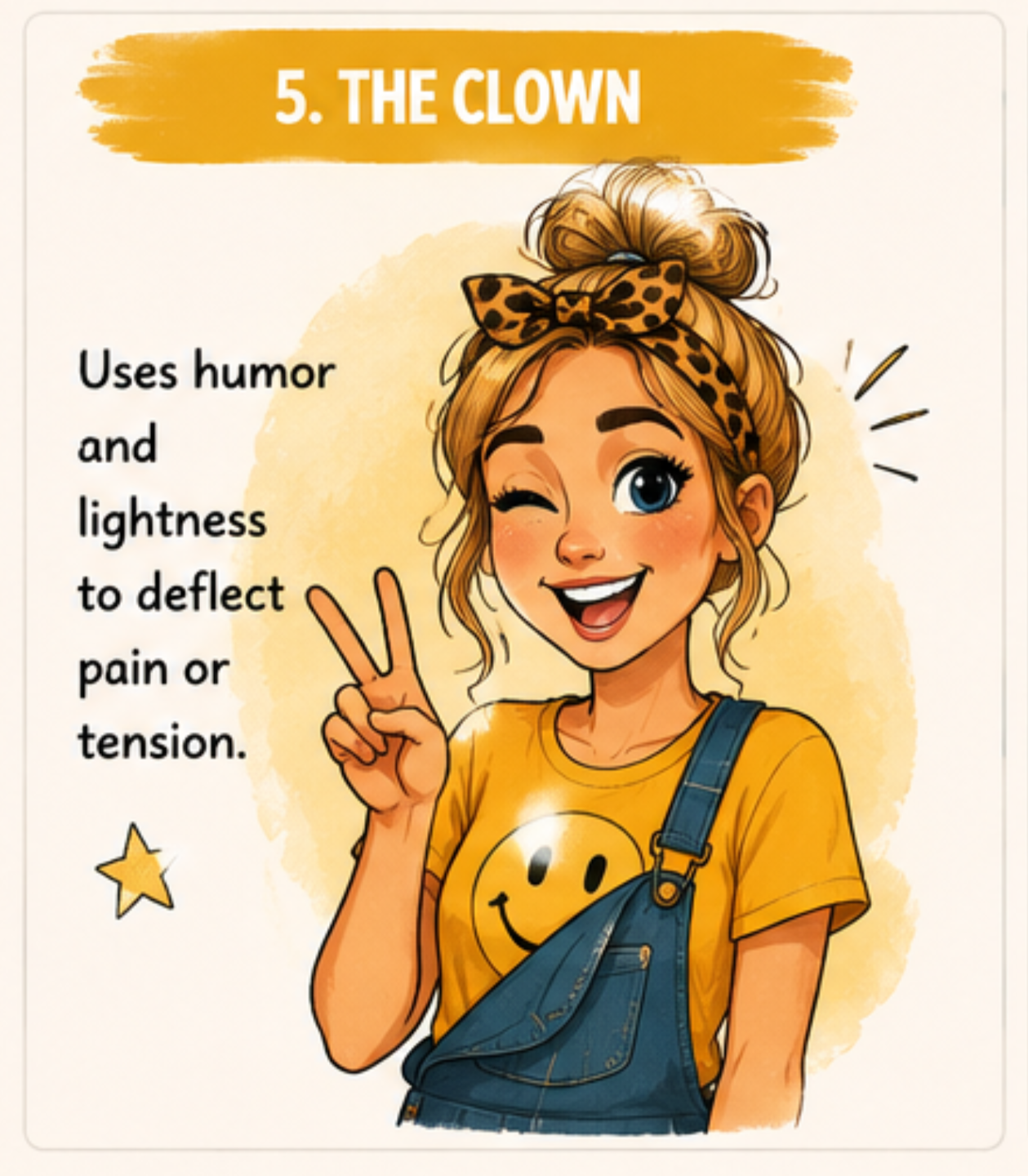
THE CLOWN
“If I can keep things light, maybe the hard feelings won't take over.”
You know how to change the energy in a room. You can make people laugh. Find the positive. Lighten the tension. Help everyone move forward. When things become heavy, something inside you naturally wants to make them lighter.
And much of it comes from something beautiful:
You bring joy.
But somewhere along the way, creating relief may have become escaping what hurts.

Core Need: Connection and emotional safety through lightness, positivity, and being enjoyable
Core Fear: If things become too heavy—or people see the heavier parts of me—I may become too much, uncomfortable, or harder to love.

Core Belief: “I need to keep things light, positive, or okay so the hard feelings don't take over.”
Protective Strategy: Joke. Distract. Minimize. Entertain. Reframe. Move on. Stay positive.

What Love Can Become: Connection maintained through being pleasant rather than being fully known.
HOW DID I BECOME THE CLOWN?
You didn't wake up one day and decide painful emotions weren't allowed.
The Clown often develops in a family system where there was already enough heaviness.
Maybe there was conflict, sadness, tension, instability, grief, anger, or emotional overwhelm.
Perhaps humor changed the atmosphere.
Maybe being cheerful brought connection.
Maybe your sadness didn't have much room.
You became the relief.
The funny one.
The positive one.
The one who could make everyone breathe again.
And somewhere along the way:
“Things feel safer when I can make the heaviness go away.”
The strategy made sense then.
But what once brought relief can eventually make it difficult to stay present with pain long enough for it to actually heal.
WHEN JOY BECOMES AN IDENTITY
God created you with a beautiful capacity for joy, humor, hope, playfulness, encouragement, and delight.
But even joy can become distorted.
- “I love bringing joy.” becomes...
- “I don't want things to get too heavy.” which becomes...
- “I need to make this feel better.”
and eventually...
- “The heavier parts of me aren't as lovable.”
What began as joy becomes avoidance.
What began as hope becomes minimizing.
What began as connection becomes performance.
And eventually, being enjoyable can feel safer than being fully known.

HOW THE CLOWN MAY SHOW UP IN YOUR MARRIAGE
You might:
- Use humor when conversations become emotionally intense.
- Minimize problems after the immediate tension passes.
- Try to “get back to normal” quickly.
- Become uncomfortable when your husband wants to sit in difficult emotions.
- Reassure yourself that things aren't really that bad.
- Distract yourself rather than staying with grief, anger, fear, or disappointment.
- Keep conversations surface-level when vulnerability feels too exposing.
- Be the person everyone thinks is “fine” even when you are hurting deeply.
- Feel uncomfortable letting someone see you cry, struggle, need, or fall apart.
And slowly:
You can become wonderful at helping everyone feel better without ever letting yourself fully feel.
WHAT IS THE CLOWN REALLY AFRAID OF?
Underneath the lightness may be a fear of:
Emotional heaviness.
What if the sadness doesn't stop? What if conflict takes over? What if your feelings become too much? What if people see the parts of you that aren't fun, positive, or okay?
So you lighten.
Distract.
Laugh.
Move forward.
Because sometimes relief feels safer than vulnerability.
WHAT THIS BORROWED IDENTITY CAN COST YOU
The Clown can look joyful while the woman underneath carries unprocessed pain no one knows exists.
You may experience:
Emotional avoidance. Loneliness. Difficulty with vulnerability. Unresolved conflict. Suppressed grief or anger. Feeling unknown despite being well-liked. Difficulty staying present with discomfort.
Perhaps the deepest cost: